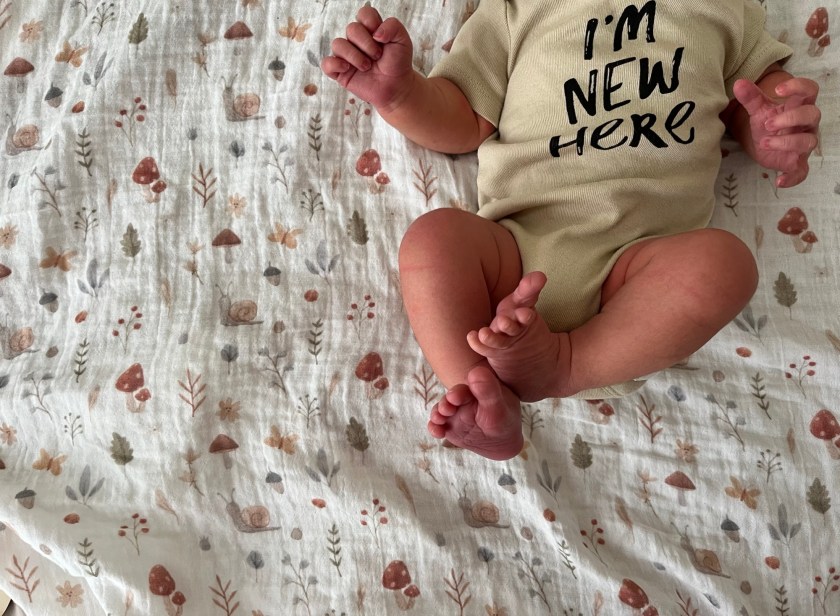
Last year, I gave birth to a 10-pound baby in my bedroom.
From that point forward, I’ve been asked a million times why I chose to give home birth. I have noticed that they are very curious about home births because they haven’t met a ton of people who have experienced them.
Luckily, I love to talk about my birth experience, so I’ve decided to lift the veil and provide some insight into why I chose a home birth.
When envisioning my prenatal, L&SD and postpartum care, I knew I wanted to work with a provider who shared my philosophy that birth isn’t a medical issue or illness by default. I was open to transferring to the care of an OB and giving birth in a hospital if anything went wrong and I needed medical attention. But I knew that in the absence of a complication, my body was more than capable of giving birth without intervention, and my best chance of giving birth on my own terms was if I did it in the comfort of my home.
To provide a bit more insight, I mapped out the pros and cons of home births to give you a better idea of why somebody might choose this path. Of course, this is not medical advice, and everybody’s needs are different, but here’s the insight I can provide on home birth experience.
Pros of a Home Birth
The benefits of home birth are endless, but there are a few notable ones to call out. Here are some of the top pros of home birth that led me to choose this path instead of the traditional OB route.
Informed Consent
One of the greatest parts of working with a midwife and giving birth at home was that everything was centered around informed consent. My midwife spent time educating me and pointing me in the direction of evidence-based resources for every choice throughout my pregnancy and birth-planning experience.
I can’t speak for every midwife, but I was under the care of Christa from Coastal Midwifery, and she was absolutely phenomenal. She was very knowledgeable, which was great. But the best thing about her was how she empowered me and supported me in making my own decisions about my care.
She truly operates with the understanding that there’s no “one-size-fits-all” approach to birth, which I truly appreciate. This is a stark contrast from what I’ve heard about a lot of hospital births.
Breastfeeding is a Priority
Another reason I opted for a home birth, specifically with the midwife I chose, is that breastfeeding is the default. I knew I wanted to exclusively breastfeed, so it was important to me that I chose a provider who provided the care and support to set me up for success with breastfeeding.
I am happy to report that nine months later, we are still going strong. I attribute a lot of that to the support and education at the very start. I firmly believe that her suggestions on nutrition and hydration in that first week made all the difference in establishing my supply and setting me up for success.
Golden Hour
One of the ways breastfeeding is prioritized during a home birth is with a “Golden Hour.” What this means is that the baby is not separated from the mother until the baby latches and until the umbilical cord is cut after a true delayed clamping (i.e., all of the blood returns to the baby, and the cord goes white).
During this time, the baby is placed directly on the mother’s chest for skin-to-skin bonding, and both have their vitals monitored in that very position. Unless there is an emergency, there is no rush to clean the baby off or take their measurements.
We didn’t have an emergency, but the midwife realized she needed to conduct some further exams on me, so my baby was handed to his dad (with his umbilical cord attached and placenta in tow) to do skin-to-skin bonding with him. Our golden “hour” was realistically closer to a half-hour long.
Comfort
I am a homebody, and my bedroom is a safe place. When you feel safe, your body releases tension. In the absence of tension, your body can do its thing to progress labor and facilitate the birthing process. Does this require any further explanation?
I just wanted to be comfortable, and for me, giving birth in the hospital sounded terrifying. My mind associates hospitals with emergency, sickness, and death, and those are not associations that I wanted surrounding my birth experience. Being at home in a safe place just made the most sense.
Cons of a Home Birth
My home birth experience was extremely positive, but there were a couple of downsides.
The most significant downside of having a home birth was preparing the space. I had to gather the materials for my birth kit and make sure everything was clean and ready to go. The midwife provided a comprehensive list of supplies and a link to a cart to buy a lot of the stuff, but I kept stressing that I was missing something. At a million weeks pregnant, I was checking my birth kit daily to make sure everything I needed was easily accessible.
I was also a little stressed about the state of my room in the aftermath of the birth. My birth team did a great job of cleaning up the pool, all the medical tools, and other stuff like that immediately after the birth, but we still ended up with quite a bit of dirty laundry and random clutter in the room which stressed me out.
When you’re in a hospital, all of the supplies are just there and there is staff to clean it up. It also would’ve been nice to have a nursing staff to help with random little tasks (like feeding me) in the days after birth since my husband and I were exhausted. Fortunately, we had our parents to help. Without a reliable support system, this would definitely be a pain.
None of these cons were significant enough to me that I would’ve opted for a hospital birth instead. They were mostly just annoyances, and they weren’t really a big deal.
Again, I had a healthy pregnancy and met all of the criteria for a home birth. If I had complications at any point in the pregnancy that disqualified me, I would’ve transferred to the care of an OB and given birth in a hospital.
Other Things to Consider with a Home Birth
I wouldn’t call this a con, but something to consider with a home birth is the lack of pain management. It’s not a bad thing, but it’s a thing. It requires some extra mental and physical preparation since you can’t rely on an epidural to lessen the intensity of the experience.
For me, that looked like a lot of exercise. Starting at around 22 weeks (which was the point of pregnancy when I started to feel like a human again), I made yoga, swimming, and walking a priority. I spent a ton of time understanding the way movement supports physiological birth. Part of this was learning moves on a yoga ball, which I did a ton of in the last couple of months.
Prenatal yoga classes and a couple of birth classes were really helpful. I also followed a lot of Instagram accounts that talk about movement for pregnancy and preparing for birth, so my algorithm served me a ton of content on the topic.
Knowing how the entire birth process worked helped to eliminate any fear and put full trust in my body. I think that helped me avoid holding tension during labor and delivery. I was also very intentional in avoiding fearmongering and negative birth stories online.
So… would you do it again?
I would absolutely opt for a home birth next time around. In fact, my birth experience was the most pleasant part of my entire pregnancy, and I’d definitely do it again.
The part I’m dreading? Pregnancy. But that’s a story for another time.
 Tea Addicts Anonymous